Tissue Engineering Unit

Head of the Unit

Maurizio Capogrossi, MD (ad interim)

The Cardiovascular Tissue Engineering Unit develops innovative strategies for the prevention and treatment of cardiovascular diseases with a major social and healthcare impact through an interdisciplinary approach that integrates biotechnology, nanotechnology, and translational medicine.
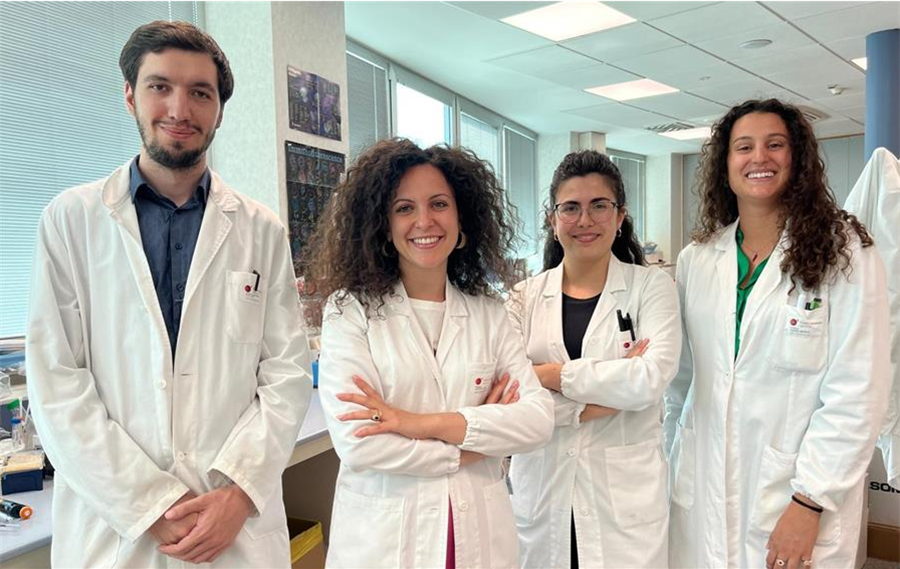
Our research has contributed to elucidating the mechanisms underlying the pathological activation of progenitor cells in the heart, aortic valve, and vasculature by combining the study of paracrine signaling with cellular biophysics approaches. Experiments performed under controlled biomechanical and metabolic conditions have demonstrated how mechanical stimuli—such as changes in flow dynamics or extracellular matrix stiffness—activate intracellular pathways mediated by the transcriptional co-activator YAP, a key regulator of extracellular matrix remodeling and fibrosis. Studies conducted by our Unit have further shown that pharmacological inhibition of YAP significantly attenuates fibrotic processes.

Building on these findings, our goal is to bridge the gap between basic research and clinical application by developing innovative solutions to reduce the burden of cardiovascular diseases. We are committed to multidisciplinary and translational research that transforms the understanding of cellular and molecular mechanisms into tangible therapeutic strategies for patients.

Selected Projects

  • Epigenetic Targeting to Counteract Aortic Valve Calcification

    Aortic valve calcification is a highly prevalent progressive cardiovascular disease in the elderly population. It is caused by the accumulation of calcium deposits that stiffen the valve leaflets and impair their normal function, ultimately restricting blood flow from the heart to the aorta. Our studies have demonstrated that this process is closely linked to cellular aging and epigenetic alterations. Using a novel compound, SPV106, we have successfully “rejuvenated” valve cells and reduced calcification in both in vitro and animal models. These findings open new avenues for the development of targeted therapies aimed at improving patient outcomes and quality of life.


    Non-Coding RNAs as Regulators of Cardiac Fibrosis

    Myocardial fibrosis, resulting from chronic ischemia, pressure overload, metabolic disturbances, or aging, is an early hallmark of heart failure and is associated with increased myocardial stiffness and impaired ventricular function. Cardiac fibroblasts sense and respond to mechanical cues from their microenvironment, promoting their transition into pro-fibrotic cells. Our recent studies have shown that inhibition of the YAP/TAZ complex reduces fibrosis and modulates the expression of specific long non-coding RNAs (lncRNAs), which may represent key regulators of the disease process. This project aims to further investigate the role of these lncRNAs in order to develop innovative diagnostic and therapeutic strategies against cardiac fibrosis.


    Super-Selective Nanotechnologies to Prevent Fibroblast Activation in Cardiac Fibrosis

    This project aims to develop a super-selective nanotheranostic platform capable of preventing the activation of cardiac fibroblasts responsible for fibrosis. The engineered nanostructures are designed to deliver targeted therapies directly to specific cell populations within the heart, thereby minimizing side effects and enhancing therapeutic efficacy.

    The goal is to create multifunctional nanoparticles that combine both diagnostic and therapeutic capabilities, enabling the early identification of activated fibroblasts and the modulation of their behavior before fibrosis becomes established. This innovative strategy has the potential to provide a personalized and highly targeted approach for the prevention of cardiac fibrosis, paving the way for safer and more effective therapies against heart failure.

best publications in the last three years

    • Reversion of aortic valve cells calcification by activation of Notch signalling via histone acetylation induction. G Garoffolo, S Ferrari, S Martino, E Pizzo, V Candino, L Curini, F Macrì, B P.T. Kruithof, A Mongelli, M Grillo, N Fanotti, P Fejzaj, M Casaburo, A Alanazi, N A Marsan, F Khaliel, A Alsulbud, M Agrifoglio, G I Colombo, M Chiesa, A Farsetti, C Gaetano, A Raucci, and M Pesce. Signal Transduction and Targeted Therapy. 2025
    • Blockade of YAP mechano-activation prevents neointima formation and adverse remodeling in arterialized vein grafts. G Garoffolo, T Sluiter, A Thomas, L Piacentini, M Ruiter, A Schiavo, M Salvi, C Saccu, S Zoli, M Chiesa, T Yokoyama, M Agrifoglio, M Soncini, G Fiore, F Martelli, G Condorelli, P Madeddu, F Molinari, U Morbiducci, P Quax, G Spinetti, M de Vries, and M Pesce. Journal of the American Heart Association. 2025
    • When cell mechanics meets epitranscriptomics: reduction of m6A in Piezo2 RNA ameliorates cardiac fibrosis. G Garoffolo, M Pesce. Cardiovascular Research. 2024
    • Mechanosensor YAP cooperates with TGF-β1 signaling to promote myofibroblast differentiation and matrix stiffening in a 3D model of human cardiac fibrosis. S Ragazzini, F Scocozza, G Bernava, F Auricchio, G Colombo, M Barbuto, M Conti, M Pesce and G Garoffolo. Acta Biomaterialia. 2022
    • Reduction of cardiac fibrosis by interference with YAP-dependent transactivation. G Garoffolo, M Casaburo, F Amadeo, M Salvi, G Bernava, L Piacentini, I Chimenti, G Zaccagnini, G Milcovich, E Zuccolo, M Agrifoglio, S Ragazzini, O Baasansuren, C Cozzolino, M Chiesa, S Ferrari, D Carbonaro, R Santoro, M Manzoni, L Casalis, A Raucci, F Molinari, L Menicanti, F Pagano, T Ohashi, F Martelli, D Massai, G Colombo, E Messina, U Morbiducci and M Pesce. Circulation Research. 2022

Staff

  • Gloria Garoffolo, PhD

    Irene Fancello, PhD

    Daniel Gamo Gonzalez, PhD

    Veronica Candino, MSc

    Consulente: Maurizio Pesce, PhD