
Atherosclerosis Prevention Unit
Head of the Unit
Pablo Werba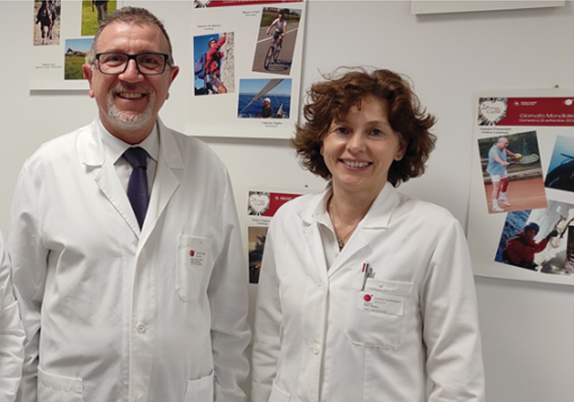
The Unit primarily focuses on the prevention of cardiovascular diseases, spanning primordial and primary prevention through to secondary prevention. As part of these activities, the Unit has developed the Global Cardiovascular Risk Management Program and, more recently, launched ProSALUTE, an innovative community-based pilot prevention project aimed at improving lifestyle habits and cardiovascular health among residents of the Ponte Lambro district.
In addition, the Unit conducts research projects aimed at identifying both novel risk factors and mechanisms involved in atherosclerotic disease, as well as lifestyle interventions and pharmacological therapies that may influence the progression and/or regression of cardiovascular disease.
Selected Projects
-
Global Cardiovascular Risk Management Program
Interventional cardiology procedures and both coronary and vascular surgical interventions can effectively treat the underlying cardiovascular condition. However, on their own, they are generally unable to modify the atherosclerotic risk factors that, in a given individual, led to the development of the atherosclerotic lesion responsible for the cardiovascular event.
Consequently, there is a clear need to complement interventional cardiology and/or cardiac surgery procedures with a comprehensive risk factor management program, with the additional goal of maximizing the long-term durability of the surgical or percutaneous intervention. The Global Cardiovascular Risk Management Program was developed with this objective in mind.
Eligible participants include patients with coronary artery disease and their first-degree relatives, as part of a targeted primary prevention strategy. Recognizing the important role of family history and genetic factors in determining cardiovascular risk, a DNA biobank has been established in parallel with the program.
In light of its positive clinical outcomes, which have been recently published, patient enrollment in the program is ongoing.
PREVEN-IAM
PREVEN-IAM is an innovative secondary prevention program currently under development in collaboration with the Cardiac Intensive Care Unit (CICU). The program will enroll approximately 400 patients who have experienced a first acute myocardial infarction (AMI), including both ST-segment elevation myocardial infarction (STEMI) and non-ST-segment elevation myocardial infarction (NSTEMI).
Participants will be randomly assigned either to usual cardiac care (UC, control group) or to usual care plus a blended intervention, consisting of limited face-to-face contacts combined with extensive web-based interaction. The intervention is designed to promote health literacy, patient empowerment, and motivation through tele-counseling and personalized coaching, with the goal of improving each patient's overall cardiovascular risk-factor profile.
The program will focus primarily on those aspects of secondary prevention that require substantial patient engagement, such as maintaining a heart-healthy lifestyle—including healthy eating habits, stress management, regular physical activity, and avoiding or quitting cigarette smoking—as well as adhering to prescribed pharmacological therapies.
These behaviors are often challenging to encourage and monitor adequately through only one or two annual cardiology visits. PREVEN-IAM aims to address this gap by providing continuous support and guidance, thereby fostering long-term adherence to preventive strategies and reducing the risk of recurrent cardiovascular events.
ProSALUTE
While the diagnosis and treatment of cardiovascular diseases necessarily take place within healthcare institutions, prevention is a choice that individuals make every day in the environments where they live. Understanding this distinction is essential for developing a new paradigm in which treatment remains the natural responsibility of healthcare professionals and the healthcare system, while prevention becomes a shared mission and responsibility among the various components of society, for the direct benefit of the community.
ProSALUTE implemented an innovative model of primordial and primary cardiovascular prevention at the community level, using novel management strategies designed to optimize citizen engagement and ensure the long-term sustainability of the program. The project was conducted between May 2015 and June 2019, and its results have recently been published.
In June 2022, a three-year follow-up initiative, named ProSALUTE Recall, was launched involving the 540 participants originally enrolled in ProSALUTE. The aim of this follow-up study is to evaluate the long-term persistence of the intervention’s effects and to assess whether the health benefits achieved during the program have been maintained over time.
RISMeD (Randomized Intervention Study on Mediterranean Diet)
RISMeD is a randomized dietary intervention study designed to evaluate the effects of the Mediterranean diet on blood fatty acid profiles.
Conducted in collaboration with the Biostatistics Unit, this study investigated whether adherence to a Mediterranean diet, individually tailored in terms of caloric intake and total fat content, could modify blood fatty acid composition in a cardioprotective direction and reduce markers of inflammation and oxidative stress more effectively than a diet based on the standard nutritional recommendations for cardiovascular risk reduction in patients with coronary heart disease (CHD).
The study enrolled 150 patients aged 30 to 75 years who had undergone coronary revascularization. Participants were assigned to follow either a specific Mediterranean diet (75 subjects) or a cardiovascular prevention diet based on current clinical guidelines (75 subjects) for a period of three months.
The results, which have recently been published, demonstrated significant differences in the effects of diets of differing nutritional quality on plasma fatty acid profiles. Further analyses are currently underway to assess the differential impact of the dietary interventions on the gut microbiome, with particular attention to changes in the composition and function of the fecal microbiota.
PREVITAL
PREVITAL is a national, multicenter primary prevention program developed within the framework of the Italian Cardiovascular Network. The project focuses on innovative approaches specifically designed to reduce the costs associated with health assessment and health promotion strategies aimed at lowering cardiovascular (CV) risk.
To achieve this goal, PREVITAL aims to:
-
Develop innovative protocols to facilitate the collection, at low cost and in real-world settings, of personal and clinical data required to estimate cardiovascular risk among individuals attending:
- General practitioners’ offices (n = 50,000),
- Outpatient clinics of the participating IRCCS research hospitals (approximately n = 15,000),
- Community pharmacies (n = 5,000) through the dedicated PREVITAL-Pharmacies sub-study.
-
Develop innovative digital technologies for the secure, automated collection and transmission of data.
-
Develop digital tools for monitoring and education, including a dedicated mobile application, to support cardiovascular prevention and patient engagement.
The effectiveness and cost-effectiveness of this approach will be evaluated across different healthcare settings. Outcomes will be assessed both within individual settings and globally through a meta-analysis of the collected data.
The study's primary outcomes include:
- Short-term control of cardiovascular risk factors (1-year follow-up);
- Long-term incidence of vascular events (7-year follow-up).
Our Unit contributes to the conception and design of the study, the development of the research protocol, the preparation of the Standard Operating Procedures (SOPs), and the creation of dedicated educational materials, particularly those focused on patient empowerment and lipid management.
In addition, as a participating IRCCS, our Unit will lead the PREVITAL-Pharmacies sub-study in collaboration with Federfarma, exploring the role of community pharmacies as accessible and effective settings for large-scale cardiovascular prevention initiatives.
-
best publications in the last three years
-
- Werba JP et al. Uptake and effectiveness of a primary cardiovascular prevention program in an underserved multiethnic urban community, Nutrition, Metabolism & Cardiovascular Diseases. PMID: 35260313. 2022 May;32(5):1110-1120. doi: 10.1016/j.numecd.2022.01.013. Epub 2022 Jan 16.
- Giroli MG, Werba JP, Risé P, Porro B, Sala A, Amato M, Tremoli E, Bonomi A, Veglia F. Effects of Mediterranean Diet or Low-Fat Diet on Blood Fatty Acids in Patients with Coronary Heart Disease. A Randomized Intervention Study. Nutrients. 2021 Jul 13;13(7):2389. doi: 10.3390/nu13072389. PMID: 34371898; PMCID: PMC8308706
- Werba, JP, Bonomi, A, Giroli, M, Amato, Manuela, Vigo, L, Agrifoglio, M, Alamanni, F, Cavallotti, L, Kassem, S, Naliato, M, Parolari, A, Penza, E, Polvani, G, Pompilio, G, Porqueddu, M, Roberto, M, Salis, S, Zanobini, M, Amato, Mauro, Baldassarre, D, Veglia, F, Tremoli, E. Long-term secondary cardiovascular prevention programme in patients subjected to coronary artery bypass surgery. Eur J Prev Cardiol. 2020 Nov 21:zwaa060. doi: 10.1093/eurjpc/zwaa060. Online ahead of print. PMID: 33624003
- Amato M, Bonomi A, Laguzzi F, Veglia F, Tremoli E, Werba JP, Giroli MG. Overall dietary variety and adherence to the Mediterranean diet show additive protective effects against coronary heart disease. Nutr Metab Cardiovasc Dis. 2020 Jul 24;30(8):1315-1321. doi: 10.1016/j.numecd.2020.04.002. Epub 2020 Apr 10. PMID: 32513579
- Werba JP, Vigo LM, Veglia F, Marenzi G, Tremoli E, Baldassarre D. Trials in "True" Dyslipidemic Patients Are Urged to Reconsider Comprehensive Lipid Management as a Means to Reduce Residual Cardiovascular Risk. Clin Pharmacol Ther. 2019 Mar 27. doi: 10.1002/cpt.1436. [Epub ahead of print] Review. PubMed PMID: 30916778
Staff
-
Monica Giroli, Biologist Nutritionist, Ph.D