Bioinformatics & Artificial Intelligence

Head of the Unit

Mattia Chiesa, PhD

The collection of healthcare information is continuously increasing, generating vast amounts of heterogeneous and continuously flowing electronic data, commonly referred to as Health Big Data. These data are primarily derived from four main sources: (i) electronic health records (EHRs), (ii) medical imaging, (iii) experiments generated through omics technologies, and (iv) the so-called Internet of Things (IoT), which gathers information from a wide range of electronic devices, including smartphones, smartwatches, implantable medical devices, and wearable technologies.

Alongside technological advancements, two major fields of computer science have experienced remarkable growth in support of biomedical data analysis: Bioinformatics and Artificial Intelligence (AI).

Bioinformatics focuses on the organization, processing, and analysis of large-scale life science datasets, much of which is generated by omics platforms such as genomics, proteomics, and metabolomics. It enables the investigation of complex biological interactions through advanced computational and analytical tools.

Artificial Intelligence in medicine, on the other hand, makes it possible to interrogate heterogeneous and often unstructured data sources—including medical images, wearable device data, and biological experiments—and to develop robust predictive models using a data-driven approach. These methodologies support clinical research by improving diagnostic accuracy, predicting clinical outcomes, and identifying patients at higher risk, thereby enabling more personalized healthcare strategies.

With a strong problem-solving mindset, the Bioinformatics & Artificial Intelligence (BioAI) Facility at Centro Cardiologico Monzino has, over the years, supported basic, preclinical, and clinical research groups throughout all stages of the analytical workflow. This support ranges from experimental design and data management to inferential analyses and the development of advanced predictive models, with the ultimate goal of advancing precision medicine and accelerating translational research.
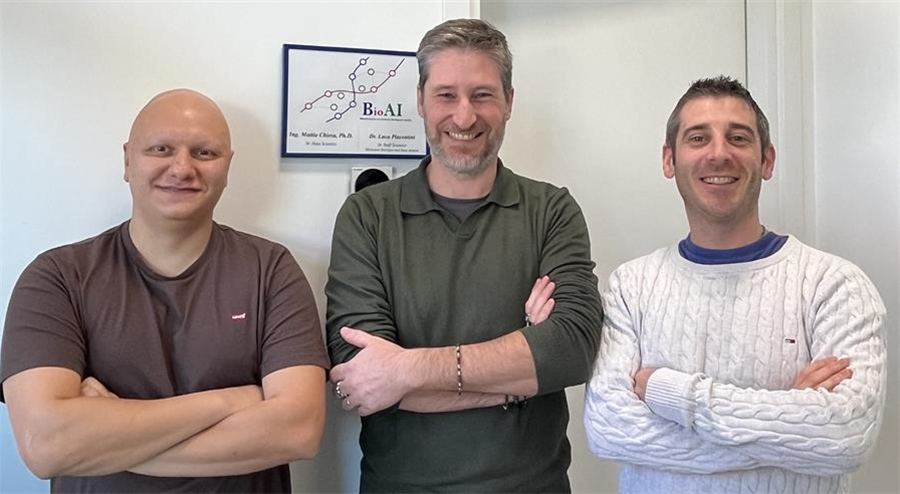
Selected Projects

  • HEURISTIC Project

    At Centro Cardiologico Monzino, artificial intelligence is becoming increasingly central to research activities. Among the most promising initiatives, the HEURISTIC Project aims to develop innovative AI-based decision-support tools capable of integrating clinical, imaging, and genetic data to predict the risk of developing different forms of heart failure.

    Heart failure is a complex clinical condition often associated with severe adverse events, including cardiac arrest and sudden cardiac death. The ability to identify individuals at increased risk before the onset of overt disease remains a major challenge in cardiovascular medicine and is essential for improving prevention and patient management.

    The goal of the HEURISTIC Project is ambitious: to create advanced digital tools that are ready for implementation in routine clinical practice and capable not only of enhancing prevention strategies but also of saving lives and improving the sustainability of healthcare systems by reducing treatment-related costs.

    It is widely recognized that precision medicine, particularly when supported by effective digital technologies, has the potential to transform the management of cardiovascular disease. Tailoring diagnostic and therapeutic strategies to the specific characteristics of individual patients—or well-defined patient subgroups—can improve treatment effectiveness, reduce adverse effects, and optimize the use of healthcare resources.

    By leveraging artificial intelligence to integrate and analyze complex, multidimensional datasets, the HEURISTIC Project seeks to advance a more personalized and proactive approach to cardiovascular care, ultimately improving clinical outcomes and supporting the future of precision cardiology.

best publications in the last three years

    • Deciphering Abdominal Aortic Diseases Through T-Cell Clonal Repertoire of Perivascular Adipose Tissue. Piacentini L, Vavassori C, Werba PJ, Saccu C, Spirito R, Colombo GI.J Am Heart Assoc. 2024 Jun 18;13(12):e034096. doi: 10.1161/JAHA.123.034096. PMID: 38888318
    • Whole-Blood Transcriptome Unveils Altered Immune Response in Acute Myocardial Infarction Patients With Aortic Valve Sclerosis. Piacentini L, Myasoedova VA, Chiesa M, Vavassori C, Moschetta D, Valerio V, Giovanetti G, Massaiu I, Cosentino N, Marenzi G, Poggio P, Colombo GI.Arterioscler Thromb Vasc Biol. 2024 Feb;44(2):452-464. doi: 10.1161/ATVBAHA.123.320106. PMID: 38126173
    • Computational and digital analyses in the INSPIRE mouse cohort to define sex-specific functional determinants of biological aging. Santin Y, Chiesa M, Alfonso A, Doghri Y, Kang R, Haidar F, Oreja-Fuentes P, Fousset O, Zahreddine R, Guardia M, Lemmel L, Rigamonti M, Rosati G, Florian C, Gauzin S, Guyonnet S, Rolland Y, de Souto Barreto P, Vellas B, Guiard B, Parini A.Sci Adv. 2024;10(50):eadt1670. doi: 10.1126/sciadv.adt1670. PMID: 39671481
    • The chronic heart failure evolutions: Different fates and routes. Agostoni P, Chiesa M, Salvioni E, Emdin M, Piepoli M, Sinagra G, Senni M, Bonomi A, Adamopoulos S, Miliopoulos D, Mapelli M, Campodonico J, Attanasio U, Apostolo A, Pestrin E, Rossoni A, Magrì D, Paolillo S, Corrà U, Raimondo R, Cittadini A, Iorio A, Salzano A, Lagioia R, Vignati C, Badagliacca R, Filardi PP, Correale M, Perna E, Metra M, Cattadori G, Guazzi M, Limongelli G, Parati G, De Martino F, Matassini MV, Bandera F, Bussotti M, Re F, Lombardi CM, Scardovi AB, Sciomer S, Passantino A, Santolamazza C, Girola D, Passino C, Karsten M, Nodari S, Pompilio G; MECKI score research group.ESC Heart Fail. 2025;12(1):418-433. doi: 10.1002/ehf2.14966. PMID: 39318188
    • CAD-RADS scoring of coronary CT angiography with Multi-Axis Vision Transformer: A clinically-inspired deep learning pipeline. Gerbasi A, Dagliati A, Albi G, Chiesa M, Andreini D, Baggiano A, Mushtaq S, Pontone G, Bellazzi R, Colombo G.Comput Methods Programs Biomed. 2024;244:107989. doi: 10.1016/j.cmpb.2023.107989. PMID: 38141455

Staff

  • Luca Piacentini, Msc

    Omar Almolla, MSc