
Arterial Morphology and Function Unit
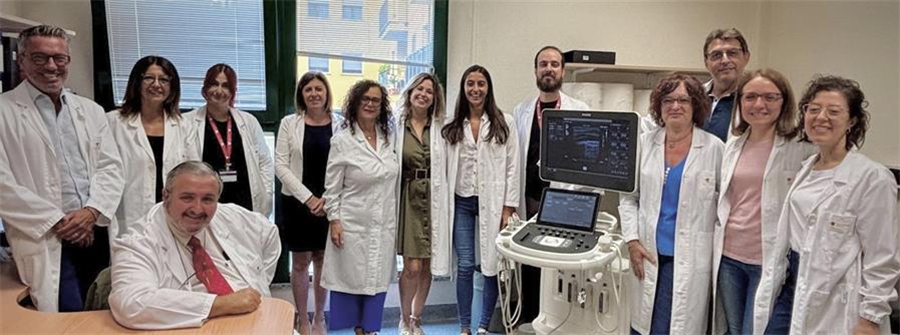
The Arterial Morphology and Function Research Unit conducts multidisciplinary research aimed at improving the understanding and prevention of atherosclerosis and cardiovascular diseases through cohort and population-based studies. Its objective is to investigate atherosclerotic disease across its entire spectrum, from the earliest stages to the most advanced manifestations.
The laboratory’s primary mission is to develop and refine innovative non-invasive vascular imaging techniques and to use them as a key tool for understanding the pathophysiology of atherosclerosis, improving risk prediction, and enhancing cardiovascular prevention strategies.
In particular, the Unit aims to:
- Integrate vascular imaging with digital and artificial intelligence approaches to improve individual cardiovascular risk assessment;
- Develop innovative primordial, primary, and secondary prevention programs;
- Validate cost-effective approaches capable of improving the prediction and prevention of cardiovascular events;
- Identify and characterize risk factors related to environment, family history, lifestyle, and psycho-behavioral aspects (such as smoking, diet, physical activity, occupation, family history of disease, etc.), and evaluate their interactions with genetics, genomics, and transcriptomics.
The main research areas include cardiovascular risk screening and prediction, the development of novel disease biomarkers, and translational research through vascular imaging techniques, digital medicine, and artificial intelligence approaches.
The Unit actively collaborates with Italian and European consortia, sharing and analyzing prospective and cross-sectional data to validate new predictive algorithms as well as imaging, clinical, genetic, epigenetic, and biochemical biomarkers.
INVESTIGATIVE METHODS
The Unit’s research relies on non-invasive diagnostic techniques to assess morphological and functional alterations of superficial arteries (e.g., carotid and brachial arteries), including:
- High-resolution B-mode ultrasonography;
- Three-dimensional (3D) ultrasonography;
- Systems for measuring arterial mechanical properties and endothelial function (laser Doppler flowmetry and photoplethysmography).
All images are analyzed using state-of-the-art technologies.