Cardiovascular Epigentics Unit

Head of the Unit

Maria Cristina Vinci, PhD

The Cardiovascular Epigenetics Unit investigates how cardiometabolic stress rewires epigenetic programs in vascular and hematopoietic cells, promoting the emergence of pathological phenotypes and the development of cardiovascular disease. By epigenetics, we refer to chromatin modifications and DNA methylation marks that regulate gene expression without altering the underlying genetic code.

The Unit’s current primary focus is on CD34⁺ hematopoietic stem and progenitor cells (HSPCs), which play a crucial role in maintaining cardiovascular homeostasis. When reprogrammed by conditions such as diabetes or obesity, these cells lose their regenerative capacity and acquire pro-inflammatory characteristics that contribute to atherosclerosis and adverse cardiac remodeling.

Our research integrates transcriptomic and chromatin profiling of human samples and preclinical models with the development of molecular and pharmacological strategies aimed at erasing maladaptive epigenetic programs. From a translational perspective, we evaluate both established cardiometabolic therapies, such as GLP-1 receptor agonists, and novel epigenetic drugs (“epidrugs”).

In parallel, we are developing gene-specific epigenetic editing platforms based on mRNA technology to activate therapeutic genes and enhance stem cell migration, homing, and survival, thereby strengthening their intrinsic regenerative potential.

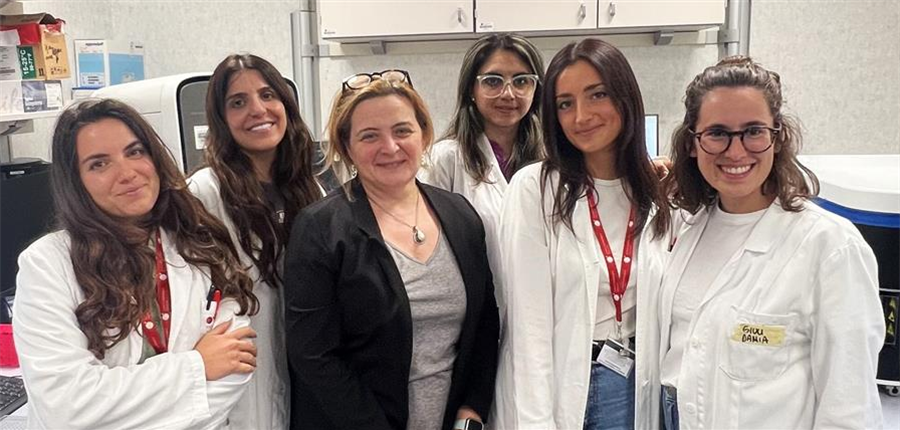
Composed of a dynamic team of young researchers, the Unit is committed to decoding and reversing the epigenetic memory of cardiometabolic diseases, paving the way for more effective prevention strategies and durable therapeutic interventions.

Selected Projects

  • GLP-1R⁺ CD34⁺ HSPCs in Cardiometabolic Disease

    We investigate a distinct subpopulation of CD34⁺ hematopoietic stem and progenitor cells (HSPCs) that express the glucagon-like peptide-1 receptor (GLP-1R). Using multi-omics approaches, functional assays, and murine models, we study immune–vascular crosstalk following myocardial injury and employ clinically approved GLP-1 receptor agonists to explore both underlying mechanisms and therapeutic potential.

    Epigenetic Dysregulation, Trained Immunity, and Cardiovascular Risk

    We examine how diabetes and obesity imprint long-lasting chromatin programs in HSPCs, enhancing pro-inflammatory traits while impairing regenerative capacity. Through single-cell transcriptomic and epigenomic profiling of patient-derived samples and preclinical models, we identify pharmacological targets aimed at modulating trained immunity and restoring cardiovascular homeostasis.

    Precision Epigenetic Reprogramming for Pulmonary Vascular Diseases

    We engineer CD34⁺ HSPCs to activate vasculoprotective pathways through targeted epigenetic editing. Preclinical studies in models of pulmonary hypertension, together with validation in patient-derived cells, are used to evaluate efficacy, safety, and translational readiness, with the ultimate goal of developing innovative regenerative therapies for pulmonary vascular disorders.

best publications in the last three years

    • Messenger RNA (mRNA) based therapeutics in transforming cardiovascular care: Progress, regulatory challenges and future perspectives. Khan M, Musazzi UM, Manellari S, Mouawad N, Damiano G, Rinaldi R, Raucci A, Costantino S, Paneni F, Minghetti P, Pompilio G, Vinci MC. Pharmacol Res. 2025;218:107847. doi: 10.1016/j.phrs.2025.107847.
    • Epigenetic mechanisms in cardiovascular complications of diabetes: towards future therapies. Damiano G, Rinaldi R, Raucci A, Molinari C, Sforza A, Pirola S, Paneni F, Genovese S, Pompilio G, Vinci MC. Mol Med. 2024;30(1):161. doi: 10.1186/s10020-024-00939-z.
    • Persistent epigenetic signals propel a senescence-associated secretory phenotype and trained innate immunity in CD34+ hematopoietic stem cells from diabetic patients. Vinci MC*, Costantino S, Damiano G, Rurali E, Rinaldi R, Vigorelli V, Sforza A, Carulli E, Pirola S, Mastroiacovo G, Raucci A, El-Osta A, Paneni F, Pompilio G. Cardiovasc Diabetol. 2024;23(1):107. doi: 10.1186/s12933-024-02195-1. (*Corresponding)
    • Liraglutide preserves CD34+ stem cells from dysfunction Induced by high glucose exposure. Sforza A, Vigorelli V, Rurali E, Perrucci GL, Gambini E, Arici M, Metallo A, Rinaldi R, Fiorina P, Barbuti A, Raucci A, Sacco E, Rocchetti M, Pompilio G, Genovese S, Vinci MC. Cardiovasc Diabetol. 2022;21(1):51. doi: 10.1186/s12933-022-01486-9.
    • Diabetes Induces a Transcriptional Signature in Bone Marrow-Derived CD34+ Hematopoietic Stem Cells Predictive of Their Progeny Dysfunction. D'Alessandra Y, Chiesa M, Vigorelli V, Ricci V, Rurali E, Raucci A, Colombo GI, Pompilio G, Vinci MC. Int J Mol Sci. 2021;22(3):1423. doi: 10.3390/ijms22031423.
    • Abnormal DNA Methylation Induced by Hyperglycemia Reduces CXCR 4 Gene Expression in CD 34+ Stem Cells. Vigorelli V, Resta J, Bianchessi V, Lauri A, Bassetti B, Agrifoglio M, Pesce M, Polvani G, Bonalumi G, Cavallotti L, Alamanni F, Genovese S, Pompilio G, Vinci MC. J Am Heart Assoc. 2019;8(9):e010012. doi: 10.1161/JAHA.118.010012.

Staff

  • Lindsey Quintero PhD

    Giulia Damiano PhD student

    Mudassir Khan PhD student

    Maria Chiara Malavena MSc

    Francesca Prisco MSc